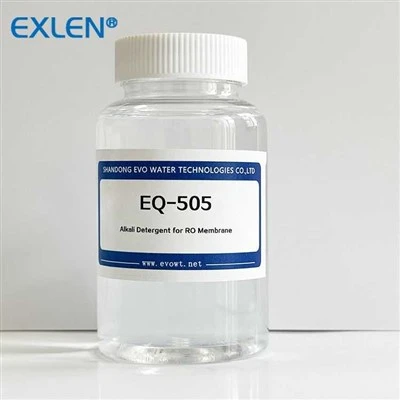
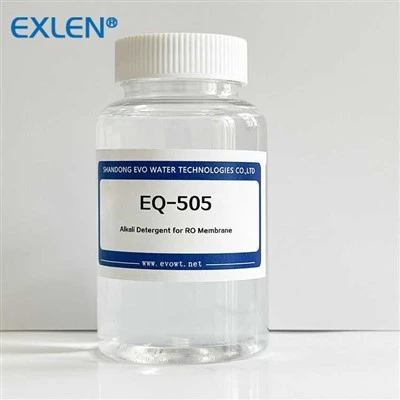
The implementation standards for reverse osmosis chemicals mainly include the following aspects:
Cleaning judgment basis:
Water production decline: Under standardized conditions, if the water production of the reverse osmosis system decreases by 10%-15% compared with the normal state, it indicates that the membrane element may be contaminated and chemical cleaning needs to be considered.
Water quality decline: If the key indicators of water quality (such as conductivity, hardness, etc.) of the produced water decrease by 10%-15%, it indicates that the membrane element may be contaminated and chemical cleaning is required.
Pollutant detection: When it is found through detection that there are pollutants such as CaCO₃, CaSO₄, BaSO₄, metal oxides, silicon deposits, organic matter and biological slime in the reverse osmosis membrane, chemical cleaning must be carried out.
Cleaning agent selection and preparation:
Agent selection: Select appropriate cleaning agents according to different types of pollution. For example, for calcium deposits, 2% citric acid can be used; for oxides (iron, copper), corresponding chelating agents can be used; for various colloids (organic matter and colloidal silica), 2% sodium tripolyphosphate + 1% EDTA tetrasodium salt can be used; for bacterial contamination, 0.1% sodium hydroxide + 1% EDTA tetrasodium salt can be used.
Reagent preparation: Solid cleaning agent must be fully dissolved before adding other chemical reagents. After the liquid is fully mixed, the pH value should be between 3-10 before it can be pumped into the reverse osmosis device.
Cleaning steps:
Prepare cleaning solution: Prepare according to the calculated cleaning solution dosage and recommended formula. When using 8-inch reverse osmosis membrane elements, the total amount of cleaning solution can be calculated according to the dosage of 40L per membrane element.
Preheat cleaning solution: Heat the cleaning solution temperature to 28-30℃. During preheating, close the valve from the chemical cleaning pump to the reverse osmosis, and open the return valve from the chemical cleaning pump to the cleaning tank to ensure uniform cleaning solution temperature.
Inject cleaning liquid: Inject cleaning liquid into the reverse osmosis at the lowest possible cleaning liquid pressure. The pressure must be so low that there is no water backflow in the return pipe on the water production side of the reverse osmosis chemical cleaning liquid.
Standards and requirements for scale inhibitors:
National standards: The national standard "GB/T 30509-2014 Industrial water treatment agent scale inhibitor for reverse osmosis membrane" stipulates the technical requirements, test methods, packaging, marking, transportation and storage of reverse osmosis scale inhibitors.
Chemical composition: The scale inhibitor should be a single-component, non-toxic and odorless chemical substance that is easily soluble in water and not difficult to degrade.
Scale inhibition performance: The scale inhibitor should have effective anti-scaling and anti-corrosion functions, and can reduce the hardness, metal ions and other microbial pollutants in the water. The deposition and destruction of pollutants, thereby improving the filtration efficiency of the system and extending the life of the filter element.
Safety and environmental protection: The scale inhibitor should comply with national environmental protection, hygiene and safety standards, have no toxicity and adverse reactions, and will not have adverse effects on the human body and the environment.