一,By Chemical Property (Most Common Classification)
This is the primary classification method, as pH and chemical composition directly determine the cleaner's ability to remove specific foulants.
1. Acidic RO Membrane Cleaners
Core Feature: Low pH value (typically 2.5–3.5), formulated with organic or inorganic acids (e.g., citric acid, hydrochloric acid) and chelating agents.
Target Foulants: Inorganic scale deposits, such as calcium carbonate, calcium sulfate, barium sulfate, strontium sulfate, and iron oxides. These scales form when mineral ions in feed water precipitate on the membrane surface due to concentration polarization.
Application Scope: Suitable for most RO membranes (cellulose acetate, polyamide, etc.), nanofiltration (NF) membranes, and ultrafiltration (UF) membranes. Often used in systems with high hardness feed water (e.g., groundwater, industrial cooling water).
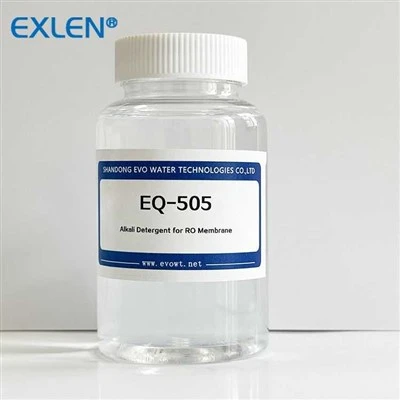
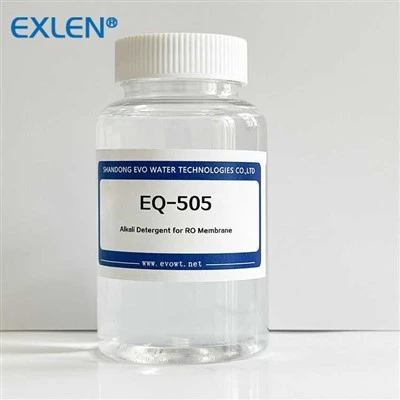
2. Alkaline RO Membrane Cleaners
Core Feature: High pH value (usually 10–12), composed of alkaline agents (e.g., sodium hydroxide, potassium hydroxide), surfactants, and dispersants.
Target Foulants: Organic matter (e.g., humic acid, fulvic acid, oils), biological fouling (bacterial slime, algae), and colloidal particles (clay, silt). These contaminants adhere to the membrane surface, blocking pores and promoting microbial growth.
Application Scope: Compatible with most RO/NF/UF membranes. Widely used in systems with high organic content in feed water (e.g., surface water, municipal wastewater reuse).
二,By Target Foulant Type
This classification focuses on the specific contaminants the cleaner is engineered to remove, aligning with real-world membrane fouling scenarios.
1. Scale-Removing Cleaners
Function: Specialized in dissolving and removing inorganic scale (the same as acidic cleaners in most cases, but some formulations target specific scales like silica scale).
Example: Silica-specific RO membrane cleaners (for hard-to-remove silica scale in high-temperature RO systems).
2. Organic & Biofouling Cleaners
Function: Eliminate organic deposits and biological slime (corresponding to alkaline cleaners, with some adding biocidal components to inhibit microbial regrowth).
Key Additive: Quaternary ammonium compounds or non-oxidizing biocides to enhance anti-microbial effects.
3. Metal Oxide Cleaners
Function: Target iron, manganese, and copper oxides (common in systems with corroded pipelines or well water with high iron content). May be acidic or neutral, with strong chelating agents to prevent oxide redeposition.
三,By Physical Form
Classified by product state, which affects storage, transportation, and on-site dilution.
1. Liquid RO Membrane Cleaners
Advantages: Ready-to-dilute, easy to dose, and uniform in concentration. No dust pollution during preparation.
Application: Most common in industrial RO systems (e.g., power plants, petrochemicals) due to convenience in large-scale use.
2. Solid (Powder/Granule) RO Membrane Cleaners
Advantages: High concentration, small volume, low transportation costs, and long shelf life.
Application: Suitable for remote areas or small-scale RO systems (e.g., commercial RO units, rural water treatment) where liquid storage space is limited.
四,Key Industry Notes
Compatibility: Always select cleaners compatible with the membrane material (e.g., avoid strong acids for some cellulose acetate membranes).
Combined Use: Acidic and alkaline cleaners are often used alternately in industrial systems-first alkaline cleaners to remove organics/biofouling, then acidic cleaners to eliminate scale.
Regulatory Compliance: Choose cleaners that meet industry standards (e.g., ANSI/NSF 60 for drinking water applications) to ensure produced water safety.