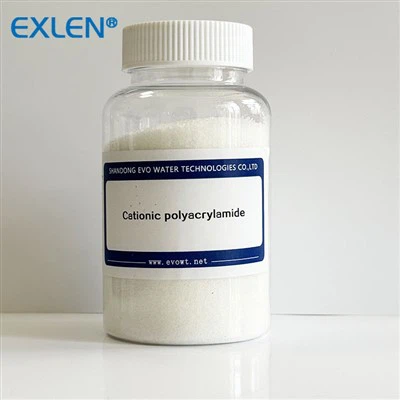
Cationic Polyacrylamide (CPAM) is a versatile polymer widely used in various industries, particularly in wastewater treatment, paper-making, and oil exploration. As a CPAM supplier, I understand the importance of choosing the right CPAM for specific applications. This blog post aims to provide valuable insights into the factors to consider when selecting CPAM, ensuring optimal performance and cost - effectiveness.
Understanding Cationic Polyacrylamide
CPAM is a water - soluble polymer with positively charged groups. Its cationic nature allows it to interact with negatively charged particles in a solution, making it an excellent flocculant and coagulant. The performance of CPAM is mainly determined by its molecular weight, charge density, and degree of hydrolysis.
- Molecular Weight: High - molecular - weight CPAM generally forms larger and stronger flocs, which are easier to separate from the liquid phase. However, they may also have higher viscosity, which can affect their mixing and dispersion in the solution. Low - molecular - weight CPAM, on the other hand, is more suitable for applications where rapid diffusion and interaction with particles are required.
- Charge Density: Charge density refers to the number of cationic groups per unit mass of the polymer. Higher charge density CPAM can neutralize more negatively charged particles, making it more effective in treating wastewater with high levels of suspended solids. But it may also cause over - coagulation in some cases, leading to the formation of unstable flocs.
Factors to Consider for Specific Applications
Wastewater Treatment
Wastewater treatment is one of the most common applications of CPAM. The characteristics of the wastewater, such as pH, temperature, and the type and concentration of contaminants, play a crucial role in CPAM selection.
- pH Level: The pH of the wastewater affects the ionization state of CPAM and the surface charge of the contaminants. In general, CPAM performs better in slightly acidic to neutral pH conditions. For example, in the treatment of industrial wastewater with a high concentration of heavy metals, a CPAM with an appropriate charge density should be selected according to the pH value to ensure effective flocculation.
- Contaminant Type: Different types of contaminants require different CPAM formulations. For organic contaminants, a CPAM with a relatively high charge density may be more effective in neutralizing the negative charges on the organic particles. In the case of treating wastewater containing inorganic suspended solids, the molecular weight of CPAM should be carefully considered. A high - molecular - weight CPAM can form large flocs, facilitating sedimentation.
In addition to CPAM, other chemicals such as Ammonia Nitrogen Remover and Phosphorus Removal Agent may be used in combination with CPAM to achieve comprehensive wastewater treatment.
Paper - Making Industry
In the paper - making industry, CPAM is used as a retention and drainage aid, as well as a strength agent.
- Retention and Drainage: To improve the retention of fine fibers and fillers in the paper - making process, a CPAM with a high charge density and moderate molecular weight is often selected. This type of CPAM can effectively adsorb on the negatively charged fibers and fillers, promoting their aggregation and retention on the paper web. At the same time, it can also improve the drainage rate of the pulp, increasing the production efficiency.
- Strength Agent: When used as a strength agent, a high - molecular - weight CPAM is preferred. It can form a cross - linked network structure between the fibers, enhancing the physical strength of the paper, such as tensile strength and burst strength.
Oil Exploration
In oil exploration, CPAM is used in drilling fluids and enhanced oil recovery.
- Drilling Fluids: In drilling fluids, CPAM can act as a viscosifier and a flocculant. A CPAM with a suitable molecular weight can increase the viscosity of the drilling fluid, improving its carrying capacity for cuttings. It can also flocculate the fine particles in the drilling fluid, preventing them from clogging the wellbore.
- Enhanced Oil Recovery: For enhanced oil recovery, a high - molecular - weight CPAM is injected into the reservoir to improve the sweep efficiency of the injected water. The polymer can reduce the mobility of the water phase, forcing it to displace more oil from the pores of the reservoir rock.
Testing and Evaluation
Before large - scale application, it is essential to conduct laboratory tests to evaluate the performance of different CPAM products.
- Jar Tests: Jar tests are commonly used in wastewater treatment to simulate the flocculation process. Different dosages of CPAM are added to the wastewater samples, and the floc formation, sedimentation rate, and supernatant clarity are observed. This can help determine the optimal CPAM type and dosage for the specific wastewater.
- Pilot - Scale Tests: In some cases, pilot - scale tests are necessary, especially for large - scale industrial applications. These tests are conducted on a smaller scale but under real - world operating conditions. They can provide more accurate information on the performance of CPAM, such as its long - term stability and compatibility with other chemicals.
Cost - Effectiveness
Cost - effectiveness is another important factor in CPAM selection. While high - performance CPAM products may have better treatment results, they may also be more expensive. It is necessary to balance the performance and cost. Sometimes, a combination of different CPAM products or a combination of CPAM with other cheaper chemicals can achieve satisfactory results at a lower cost.


Comparison with Anionic Polyacrylamide (APAM)
In some applications, Anionic Polyacrylamide (APAM) may be an alternative to CPAM. APAM has negatively charged groups and is suitable for treating wastewater with positively charged particles or in applications where a different flocculation mechanism is required. For example, in the treatment of wastewater from some metal - plating industries, APAM may be more effective in flocculating the positively charged metal ions. However, in most cases where negatively charged contaminants are dominant, CPAM is the preferred choice.
Conclusion
Choosing the right Cationic Polyacrylamide (CPAM) for a specific application requires a comprehensive understanding of the application requirements, the characteristics of the CPAM products, and the relevant environmental factors. By considering factors such as molecular weight, charge density, wastewater characteristics, and cost - effectiveness, and conducting proper testing and evaluation, the most suitable CPAM can be selected to achieve optimal performance.
If you are looking for high - quality CPAM products for your specific application, we are here to help. Our team of experts can provide you with professional advice and customized solutions. Contact us to start a procurement discussion and find the best CPAM for your needs.
References
- "Polyacrylamide in Wastewater Treatment" - Journal of Environmental Science and Technology
- "Application of Cationic Polymers in the Paper Industry" - TAPPI Journal
- "Polymer - Based Enhanced Oil Recovery" - SPE Reservoir Evaluation & Engineering