Hey there! As a supplier of Anionic Polyacrylamide (APAM), I often get asked about the recommended dosage of APAM in water treatment. It's a crucial question because using the right amount can make a huge difference in the efficiency and cost - effectiveness of the water treatment process. So, let's dive right in and explore this topic.
What is Anionic Polyacrylamide APAM?
Before we talk about the dosage, let's briefly touch on what APAM is. APAM is a water - soluble polymer with negatively charged groups. It's widely used in water treatment for various purposes, such as coagulation, flocculation, and sedimentation. When added to water, it helps to bind together small particles, making them larger and easier to settle or filter out. This is super useful in treating wastewater from industries like mining, papermaking, and food processing, as well as in municipal water treatment plants. You can learn more about it here.
Factors Affecting the Recommended Dosage
There isn't a one - size - fits - all answer when it comes to the dosage of APAM. Several factors play a role in determining how much you should use:
1. Water Quality
The quality of the water being treated is a major factor. If the water has a high concentration of suspended solids, you'll generally need a higher dosage of APAM. For example, in mining wastewater, which can contain a large amount of fine particles like silt and clay, a relatively high dose might be required to achieve good flocculation. On the other hand, if the water has a low turbidity, a lower dosage could be sufficient.
2. Type of Wastewater
Different types of wastewater have different characteristics. Industrial wastewater from the chemical industry might have a complex mixture of pollutants, including heavy metals and organic compounds. In such cases, the dosage of APAM needs to be carefully adjusted to deal with these specific contaminants. Municipal wastewater, which mainly contains human waste and household debris, also has its own requirements.


3. Treatment Goals
What are you trying to achieve with the water treatment? If your goal is to remove a large amount of suspended solids quickly, you might need a higher initial dosage. However, if you're looking for a more gentle and long - term treatment, a lower, more consistent dosage could be better. For instance, if you're treating water for reuse in a manufacturing process, you'll want to ensure that the water meets strict quality standards, which might influence the dosage.
4. Mixing Conditions
How well the APAM is mixed with the water also matters. Good mixing ensures that the polymer is evenly distributed throughout the water, allowing it to interact effectively with the particles. If the mixing is poor, you might need to increase the dosage to compensate for the uneven distribution.
General Dosage Guidelines
While the exact dosage depends on the factors mentioned above, here are some general guidelines:
1. Low - Turbidity Water
For water with low turbidity (less than 10 NTU - Nephelometric Turbidity Units), a dosage of 0.1 - 1 mg/L of APAM might be sufficient. This is often the case for water that has already undergone some pre - treatment or for water sources with naturally low levels of suspended solids.
2. Medium - Turbidity Water
Water with medium turbidity (10 - 100 NTU) typically requires a dosage of 1 - 5 mg/L. This includes many types of municipal wastewater and some industrial wastewater streams.
3. High - Turbidity Water
For water with high turbidity (greater than 100 NTU), such as mining wastewater or wastewater from some construction sites, a dosage of 5 - 20 mg/L or even higher might be necessary. In these cases, the high concentration of particles requires more APAM to form large, settleable flocs.
Testing and Optimization
It's important to note that these are just guidelines. The best way to determine the optimal dosage of APAM for your specific water treatment application is through testing. You can conduct jar tests, which involve adding different dosages of APAM to small samples of the water and observing the flocculation and sedimentation process.
Here's how a jar test works:
- Take several samples of the water in separate jars.
- Add different dosages of APAM to each jar, starting from a low dosage and increasing gradually.
- Stir the samples at a consistent speed for a set period of time.
- Let the samples settle and observe the size and settling rate of the flocs.
- Choose the dosage that gives the best flocculation and sedimentation results.
Comparing with Other Water Treatment Chemicals
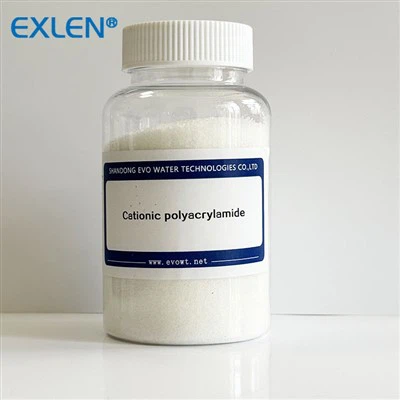
It's also worth comparing APAM with other water treatment chemicals. Cationic Polyacrylamide (CPAM) is another type of polyacrylamide, but it has positively charged groups. CPAM is often used for treating wastewater with negatively charged particles or for sludge dewatering. In some cases, a combination of APAM and CPAM might be used to achieve better results.
Phosphorus Removal Agent is used specifically for removing phosphorus from water. While APAM is mainly focused on particle removal, in some water treatment processes, both might be used together to meet different treatment goals.
Importance of Correct Dosage
Using the correct dosage of APAM is not only important for effective water treatment but also for cost - efficiency. If you use too little APAM, the flocculation might be incomplete, and the water quality won't meet the desired standards. On the other hand, using too much APAM can be wasteful and might even cause problems. Excessive amounts of APAM can lead to the formation of large, sticky flocs that are difficult to handle and can clog filters.
Contact for More Information
If you're still unsure about the right dosage of APAM for your water treatment needs, or if you have any other questions about our products, don't hesitate to reach out. We have a team of experts who can provide you with personalized advice based on your specific situation. Whether you're a small - scale water treatment plant or a large industrial facility, we're here to help you find the most effective and cost - efficient solution.
References
- Water Treatment Handbook, Third Edition, edited by Frank R. Spellman
- "Polyacrylamide in Water Treatment" by Water Research Foundation
- "Flocculation and Coagulation in Water and Wastewater Treatment" by A. D. Randolph and P. J. Gregory