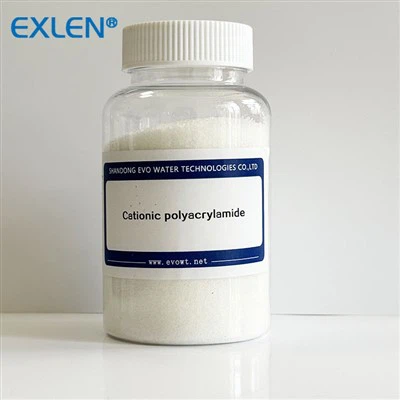
As a supplier of Anionic Polyacrylamide (APAM), I understand the importance of ensuring the quality of our products. APAM is a versatile polymer widely used in various industries, including wastewater treatment, papermaking, and mining. Its effectiveness depends largely on its quality, which can be influenced by factors such as molecular weight, degree of hydrolysis, and purity. In this blog post, I will share some key methods and considerations for testing the quality of APAM.
Molecular Weight Determination
One of the most critical parameters of APAM is its molecular weight. The molecular weight affects the polymer's viscosity, flocculation ability, and solubility. Higher molecular weight APAM generally has better flocculation performance but may have lower solubility. There are several methods to determine the molecular weight of APAM:
Gel Permeation Chromatography (GPC)
GPC is a widely used technique for measuring the molecular weight distribution of polymers. It separates polymer molecules based on their size as they pass through a column filled with a porous stationary phase. By comparing the elution time of the sample with that of standard polymers of known molecular weight, the molecular weight of APAM can be determined. GPC provides valuable information about the average molecular weight (number - average, weight - average, and z - average) and the polydispersity index (PDI), which reflects the breadth of the molecular weight distribution.
Viscosity Measurement
Viscosity is related to the molecular weight of APAM. A higher molecular weight APAM solution typically has a higher viscosity. The intrinsic viscosity of APAM can be measured using a viscometer, such as an Ubbelohde viscometer. The Mark - Houwink equation can then be used to correlate the intrinsic viscosity with the molecular weight. However, it should be noted that viscosity measurement is affected by factors such as temperature, concentration, and shear rate. Therefore, strict experimental conditions need to be controlled to obtain accurate results.
Degree of Hydrolysis Analysis
The degree of hydrolysis (DH) of APAM refers to the proportion of acrylamide units that have been hydrolyzed to acrylate units. The DH affects the charge density and solubility of APAM. A proper degree of hydrolysis is crucial for the polymer's performance in different applications.
Titration Method
The most common method for determining the DH is the acid - base titration method. In this method, the APAM sample is first dissolved in water, and then an acid or base is added to neutralize the acrylate groups. By measuring the amount of acid or base consumed during the titration, the number of acrylate units can be calculated, and thus the DH can be determined.
Infrared Spectroscopy (IR)
IR spectroscopy can also be used to analyze the DH of APAM. The characteristic absorption peaks of acrylamide and acrylate groups in the IR spectrum can be used to quantify their relative contents. This method is non - destructive and can provide rapid analysis, but it requires calibration with standard samples to obtain accurate results.
Purity Testing
The purity of APAM is another important factor affecting its quality. Impurities such as residual monomers, salts, and other contaminants can reduce the polymer's performance and may even cause environmental and health problems.
Residual Monomer Analysis
Residual acrylamide monomer in APAM is a potential health hazard. High - performance liquid chromatography (HPLC) is a common method for detecting and quantifying residual acrylamide monomers. The sample is injected into an HPLC system, and the acrylamide monomer is separated from the polymer and other components based on its chemical properties. The concentration of residual acrylamide can then be determined by comparing the peak area of the sample with that of a standard solution.
Ash Content Determination
The ash content represents the amount of inorganic salts and other non - organic impurities in APAM. The sample is weighed and then heated at a high temperature (usually around 600 - 800°C) in a muffle furnace until all the organic matter is burned off. The remaining ash is weighed, and the ash content is calculated as a percentage of the original sample weight.
Performance Testing
In addition to the above - mentioned physical and chemical property tests, performance testing is also essential to evaluate the quality of APAM.
Flocculation Performance
In wastewater treatment applications, the flocculation performance of APAM is a key indicator. A jar test is a commonly used method to evaluate the flocculation performance. In a jar test, a series of beakers are filled with wastewater samples, and different dosages of APAM are added to each beaker. The mixtures are then stirred at a certain speed for a specific time, followed by a settling period. The clarity of the supernatant, the size and settling velocity of the flocs are observed and measured. The optimal dosage of APAM can be determined based on the test results.
Filterability
In some applications, such as the dewatering of sludge, the filterability of APAM - treated sludge is an important performance parameter. A Buchner funnel or a filter press can be used to measure the filterability. The sludge is mixed with APAM, and then the mixture is filtered under a certain pressure. The filtration rate and the moisture content of the filter cake are measured to evaluate the effectiveness of APAM in improving the filterability of the sludge.


Other Related Products
In addition to Anionic Polyacrylamide (APAM), we also supply other related wastewater treatment chemicals, such as Cationic Polyacrylamide CPAM, Ammonia Nitrogen Remover, and Phosphorus Removal Agent. These products can be used in combination with APAM to achieve better wastewater treatment results.
Conclusion
Testing the quality of Anionic Polyacrylamide (APAM) is a comprehensive process that involves multiple aspects, including molecular weight determination, degree of hydrolysis analysis, purity testing, and performance testing. By using a combination of these methods, we can ensure that our APAM products meet the high - quality standards required by different industries. If you are interested in our APAM products or other wastewater treatment chemicals, please feel free to contact us for procurement and negotiation. We are committed to providing you with high - quality products and excellent service.
References
- "Polyacrylamide and Its Copolymers: Synthesis, Characterization, and Applications" by X. Huang and H. Zhang.
- "Wastewater Treatment Technology" by D. Wang.
- "Analysis of Polymers in Environmental Samples" by L. Chen.